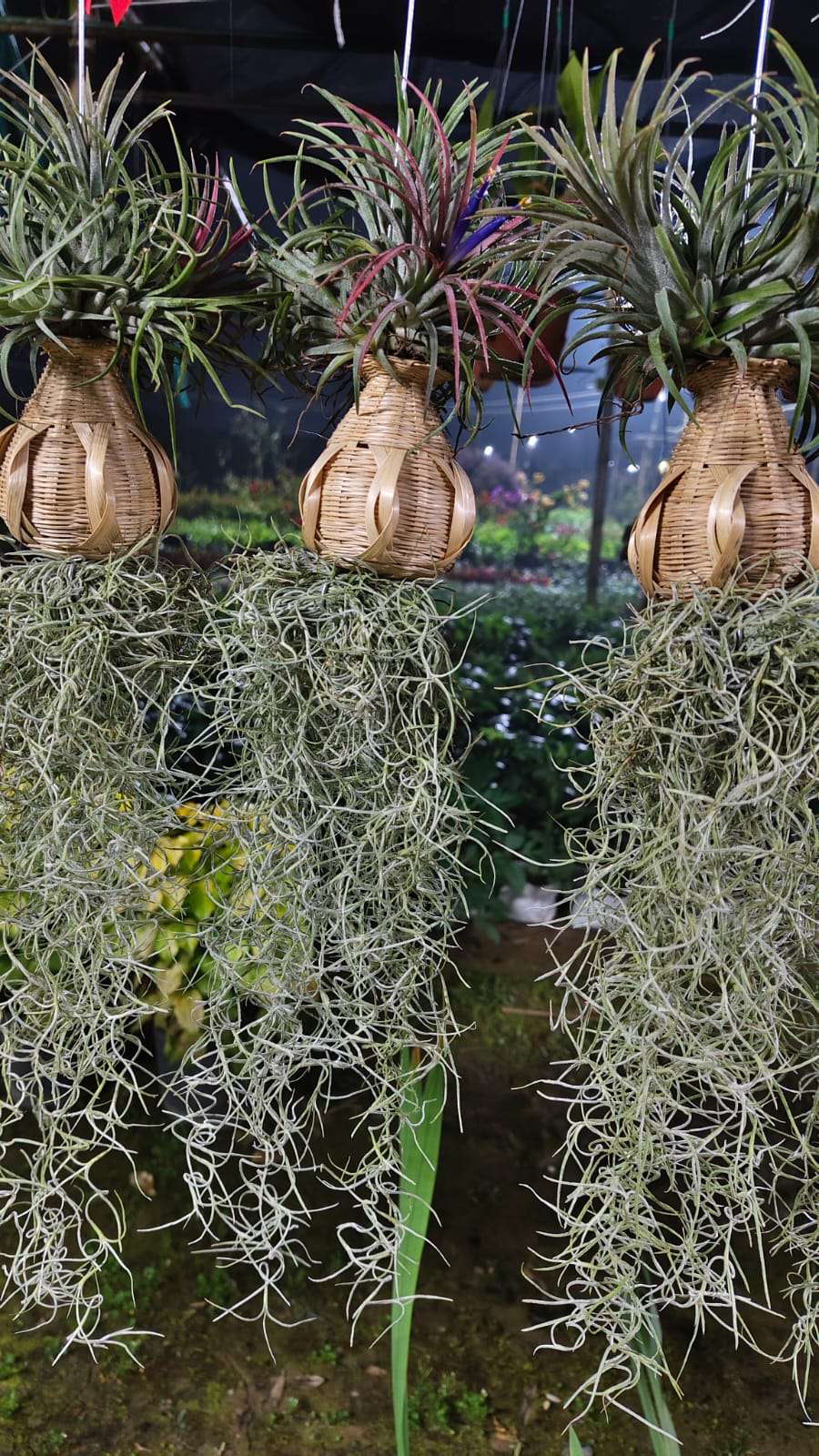

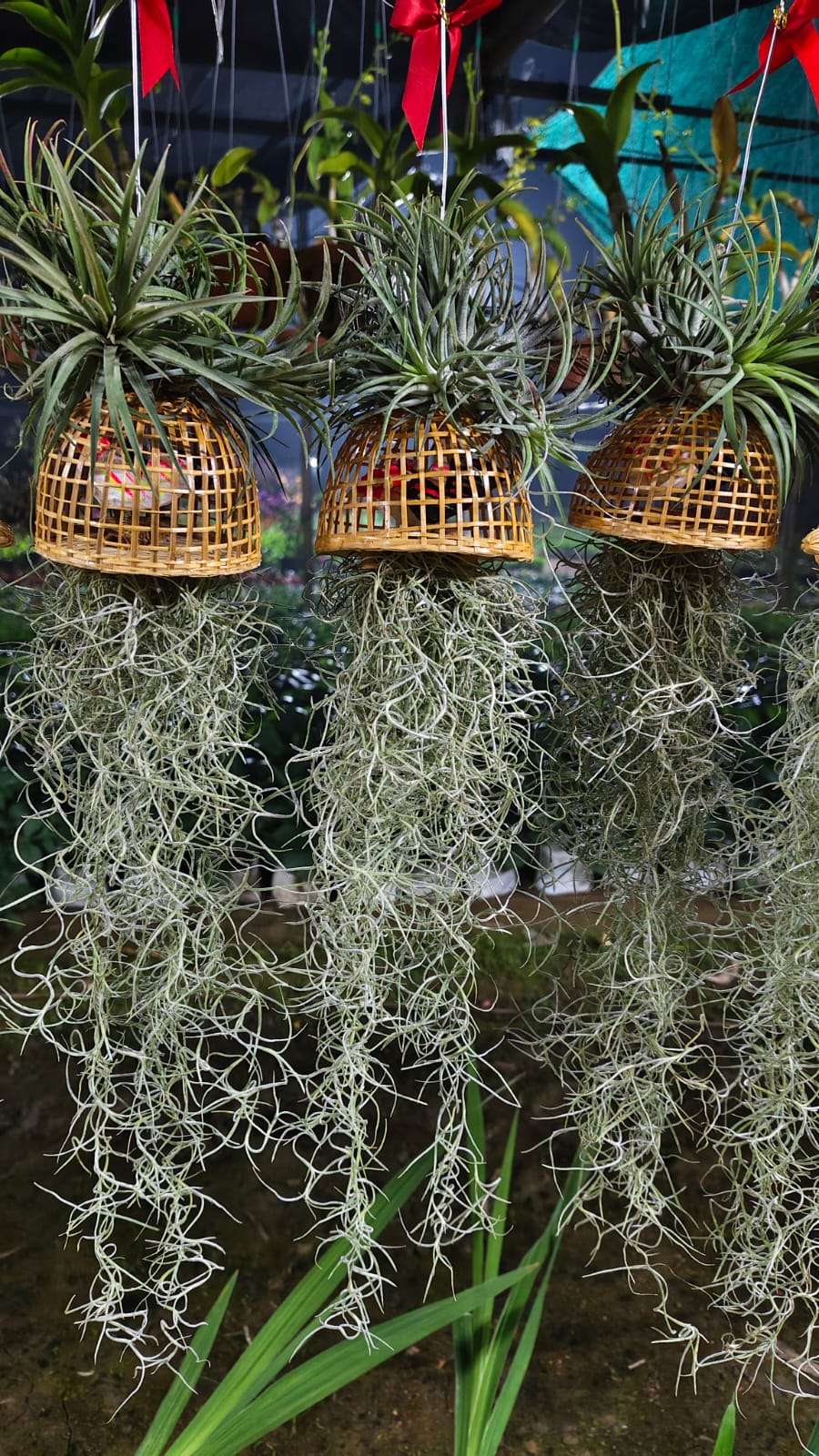
TILLANDSIOIDEAE WITH SPANISH MOSS
$ 8.01
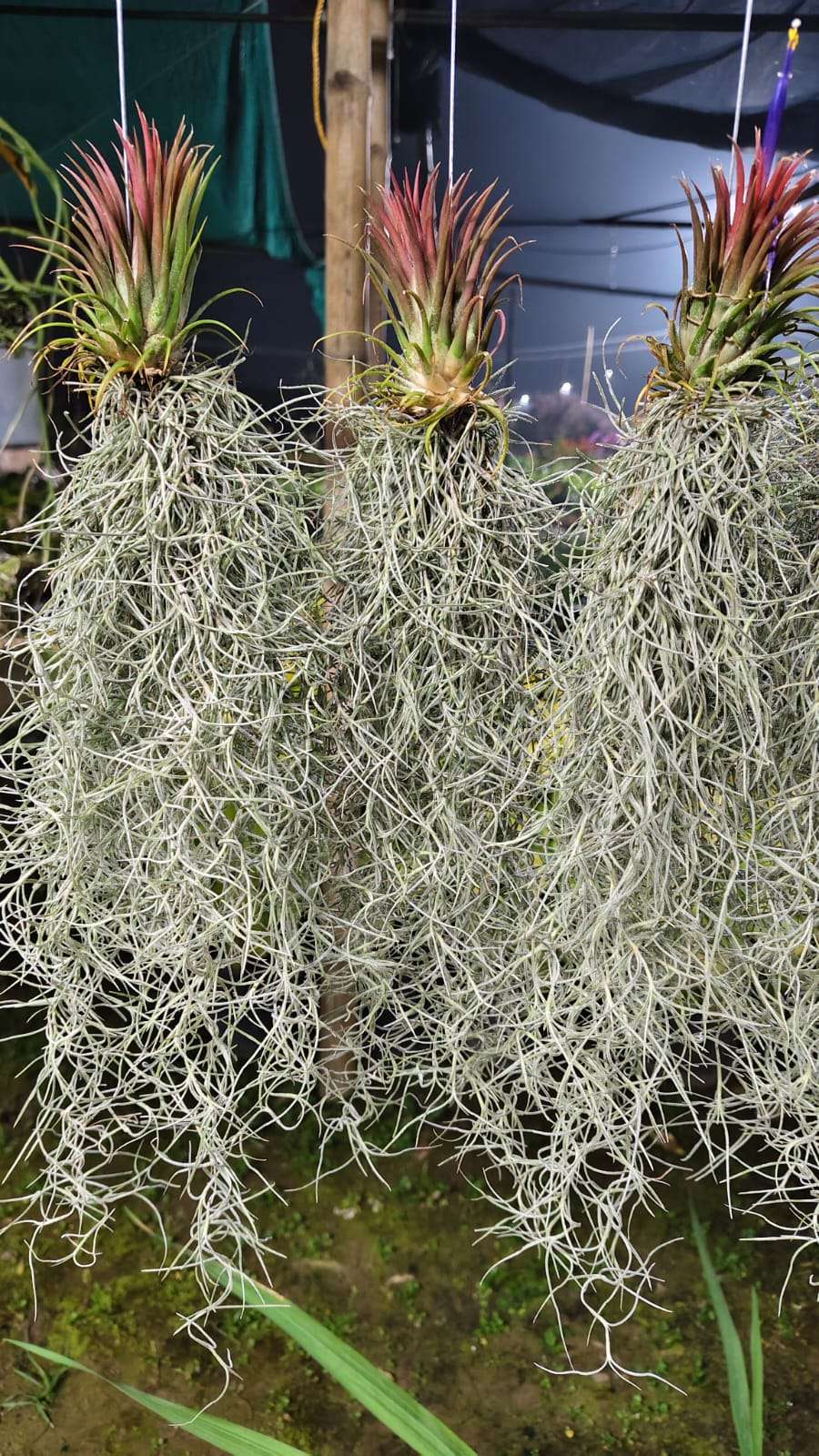
Description Tillandsioideae – with emphasis on Spanish Moss (Tillandsia usneoides) Family: BromeliaceaeSubfamily: Tillandsioideae Overview Tillandsioideae is a major subfamily of bromeliads best known for air plants—species that absorb water and nutrients from the air rather than soil. Among them, Spanish Moss (Tillandsia usneoides) is one of the most iconic and widely distributed members, famous for its long, silvery, cascading strands. Spanish Moss (Tillandsia usneoides) – Full Description Common names: Spanish Moss, Old Man’s Beard, Tree BeardGrowth habit: Epiphytic (grows on trees, wires, rocks; not parasitic) Appearance Spanish moss forms long, pendulous, thread-like chains that can reach several meters in length. It consists of thin, flexible stems densely covered with narrow, curved leaves. The entire plant appears silver-gray due to a thick covering of trichomes, which help absorb moisture and nutrients from the air. Flowers Small, inconspicuous Pale green to yellowish Lightly fragrant Short-lived but charming on close inspection Roots Minimal and non-absorptive Used only for anchoring to surfaces Natural Habitat & Distribution Spanish moss is native to the Americas, ranging from the southern United States through Central America to South America. It thrives in: Humid forests Swamps and riverbanks Coastal and subtropical regions Despite growing on trees, it does not harm the host—it simply uses it for support. Light Requirements Bright, filtered light Tolerates partial shade Avoid intense, direct midday sun for long periods Water & Humidity Prefers high humidity Water by misting or soaking 2–3 times a week in warm weather In dry climates, daily misting is beneficial Must dry fully within a few hours to prevent rot Temperature Ideal range: 18–30°C Can tolerate short dips near 5°C Not frost-hardy for extended periods Air Circulation Excellent airflow is essential. Stagnant air combined with moisture can lead to fungal issues. Growth & Propagation Grows slowly but steadily under ideal conditions Propagates naturally by fragmentation—broken strands continue growing independently Uses & Significance Popular in decorative hanging displays and terrariums Historically used for stuffing mattresses and upholstery Provides nesting material and shelter for birds and insects Indicator of good air quality Summary Tillandsioideae, especially Spanish moss, represents the ultimate expression of air-plant adaptation—soil-free living, atmospheric feeding, and elegant form. With proper humidity, airflow, and gentle light, Spanish moss becomes a striking, low-maintenance plant suitable for both naturalistic and modern displays. If you want, I can also provide a short commercial description, care guide, or comparison with other Tillandsia species.